
 By William Byrd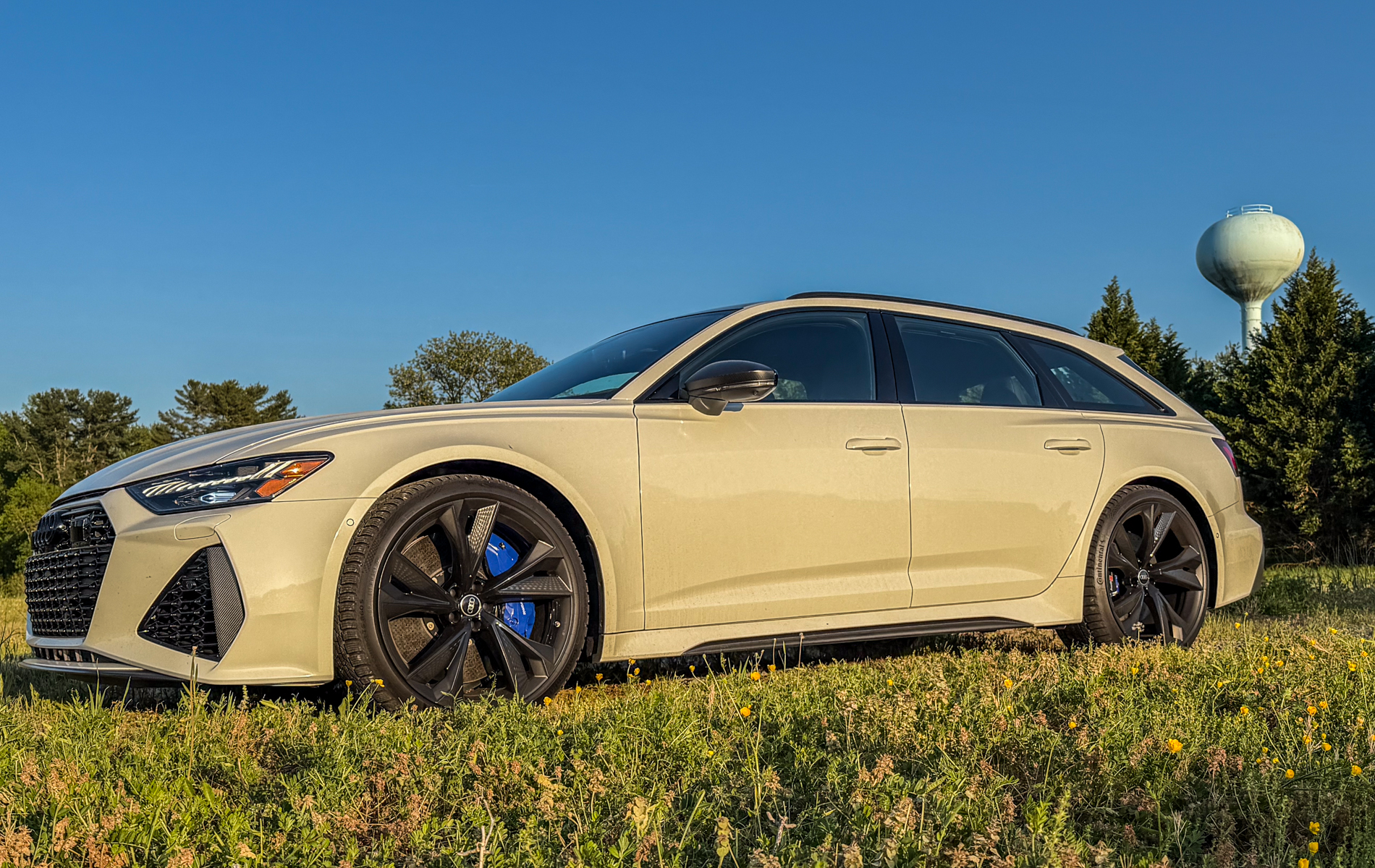
A few years ago, I drove the 2023 Audi RS 6 Avant and wrote about the forever car thought experiment. You know the one: a benefactor appears, offers you one car, free, yours to keep indefinitely, but you have to pick right there on the spot. The idea is that it forces you to be honest about what you actually want versus what you think you want. When I drove that RS 6, I said it might be the answer. Then Audi went and built the Performance variant, turned the twin-turbo V8 up to 630 horsepower, added ceramic brakes, and sent me a Glacier White example with an as-tested price of $158,865.
The forever car question is back. Is it still the one?


Audi RS 6 Avant Overview
The 2026 RS 6 Avant lineup is pretty focused: three versions of the same essential vehicle, distinguished by output and equipment. All are built around a 4.0-liter twin-turbocharged V8 with a mild-hybrid assist system, an 8-speed Tiptronic automatic, and Quattro all-wheel drive.

RS 6 Avant — $109,900.
The entry point, which is obviously a relative term at this price. It only gets 590 horsepower, 590 lb-ft of torque, and hits zero to 60 in 3.5 seconds. Standard equipment includes 21-inch wheels, adaptive air suspension, Bang & Olufsen audio, sport seats, and the full RS driver interface. This is the RS 6 for buyers who want the performance wagon experience without diving deeper into the options list.
RS 6 Avant Performance — $130,700.
The car we’re driving here. Output jumps to 630 horsepower and 627 lb-ft of torque. Zero to 60 in 3.2 seconds. The Performance adds a sport rear differential, revised suspension tuning, 22-inch wheels, and an RS-specific performance brake system as standard. This is not a trim upgrade with a different badge. It is a meaningfully different driving experience.
RS 6 Avant Performance with Audi Sport Package — $141,000+.
Raises the top speed limiter from 155 mph to 190 mph, adds carbon ceramic brakes, and adjusts the suspension for track use.

Our tester carries the ceramic brake option ($9,000 from the matte carbon package) and the RS Design package in blue ($3,000), among others, landing the as-tested figure at $158,865. That number includes a gas guzzler tax of $1,300.


Audi RS 6 Avant Performance Inside & Out
The wide body, the pronounced wheel arches, the long roofline that flows into the rear, and the Avant stance that makes it look like it is moving even when parked. In Glacier White with matte carbon trim, black roof rails, and blue brake calipers peeking through the wheels, our test car looked genuinely spectacular. I still prefer a more interesting color, but it’s better than the black one we tested in 2023.
The proportions are simply right. Compare it to the current BMW M5 Touring: the BMW looks slightly overwrought, like it is trying to communicate its performance. The RS 6 Avant does not try. It just is. The result is a car that will look correct ten years from now, which is a rare quality.


One honest note on the 21-inch black wheels that come standard on this trim: they are not the move. The black finish reads as anonymous on a car this distinctive, and the RS 6 Avant deserves something that lets the design breathe. There are brighter, more interesting wheel options in the Audi catalog that would do the exterior proper justice. The ceramic blue brake calipers on our test car, visible through the spokes, are genuinely beautiful. Give them a wheel that shows them off.


The RS 6 Avant Performance is a nearly $160,000 car. The interior earns that number in most places and falls short in one specific, frustrating one that might be important to people who can afford this car.
Let’s start with what works. The dual-screen setup, with the main infotainment display flanked by physical shortcut buttons on the left and a dedicated climate and comfort screen below, is one of the better implementations of the multi-screen layout currently available. CarPlay cleanly takes over the primary screen, while the physical buttons remain accessible for quick jumps back to native functions. The lower screen handles HVAC without requiring menu navigation. It is a setup that works well for daily use. On a bright day, glare on the lower screen is a real problem. The small metal strip at the bottom of the upper display acts as a reflector, making the lower screen difficult to read when the sun hits it at the wrong angle.


The carbon fiber trim in our test car is genuine and looks excellent. You can tell immediately. It has the right weight and texture, and the blue threading woven into the fabric ties directly to the Mercato Blue stitching on the seats and the blue seatbelts. It is a coherent interior design story, told in detail, and it reads as intentional rather than decorative. The Alcantara-wrapped flat-bottom steering wheel is, without exaggeration, one of the best in the business. The material has a warmth when heated that leather cannot match. Leather gets hot. Alcantara gets warm.
RS sport seats are excellent. They are deeply bolstered, well-ventilated on the first two settings, and appropriately firm for a car built to be driven hard. The heat is well-calibrated. Level two is genuinely pleasant. Level three will remind you it is there and burned my heiney a bit.
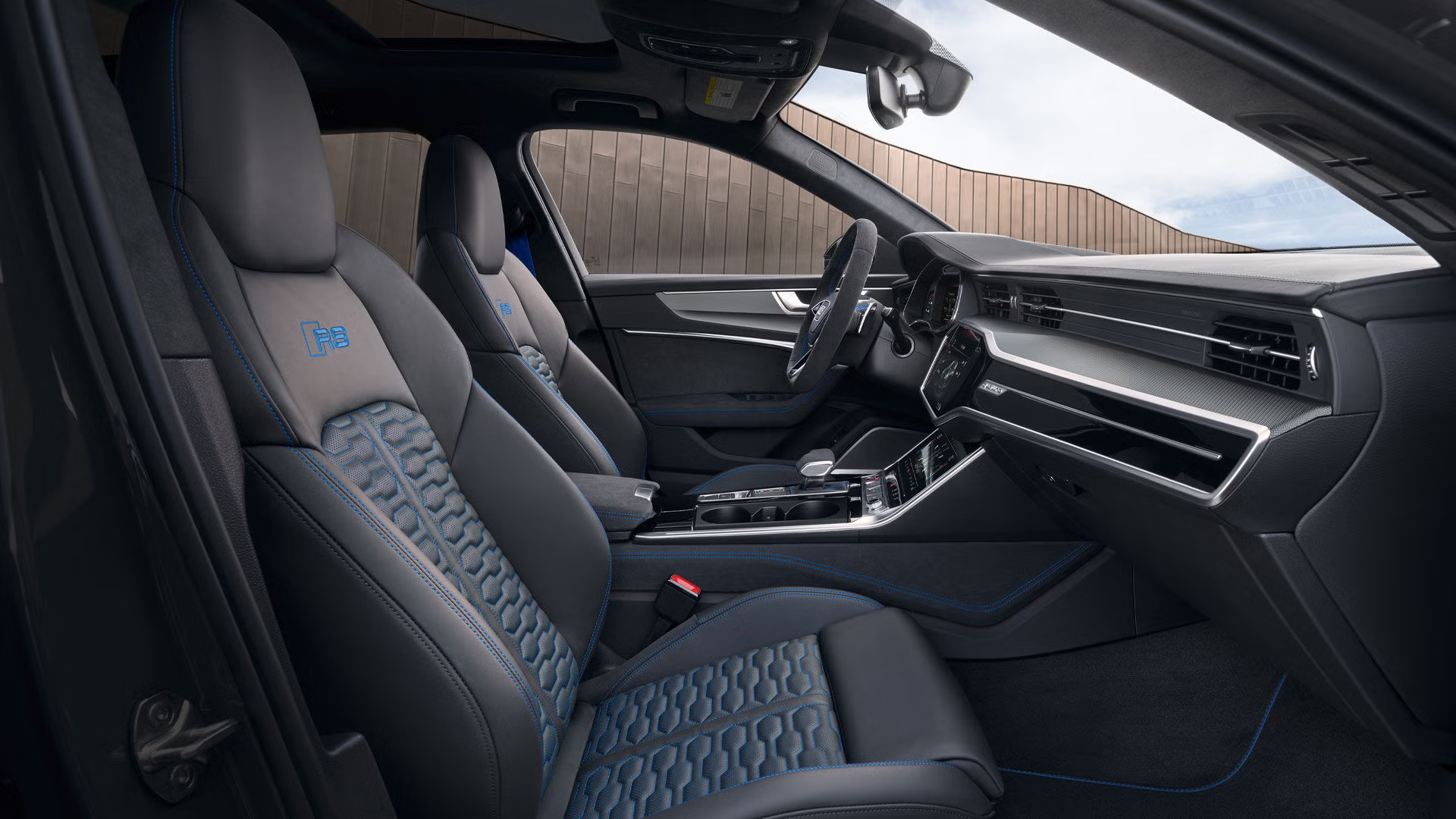
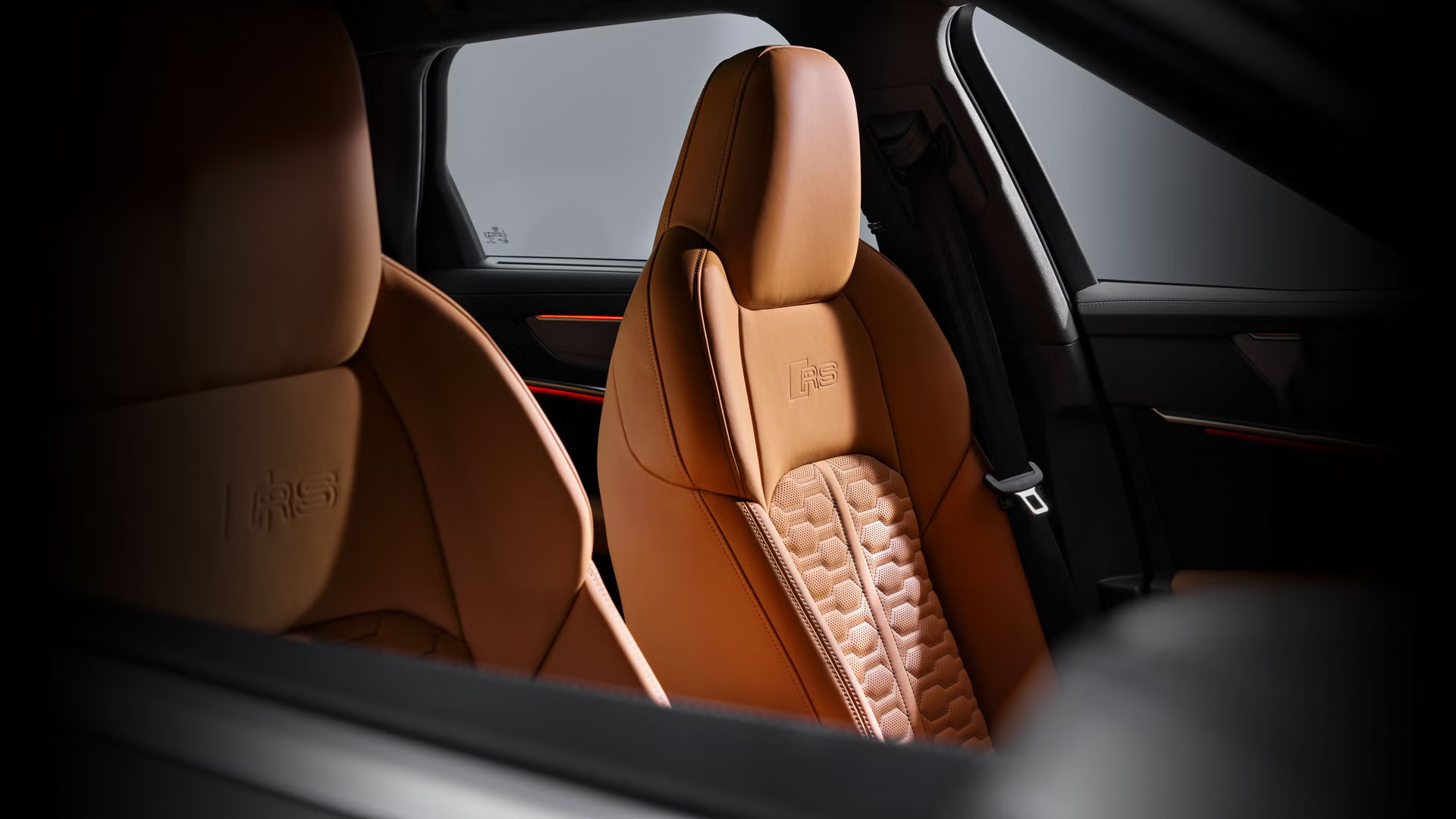
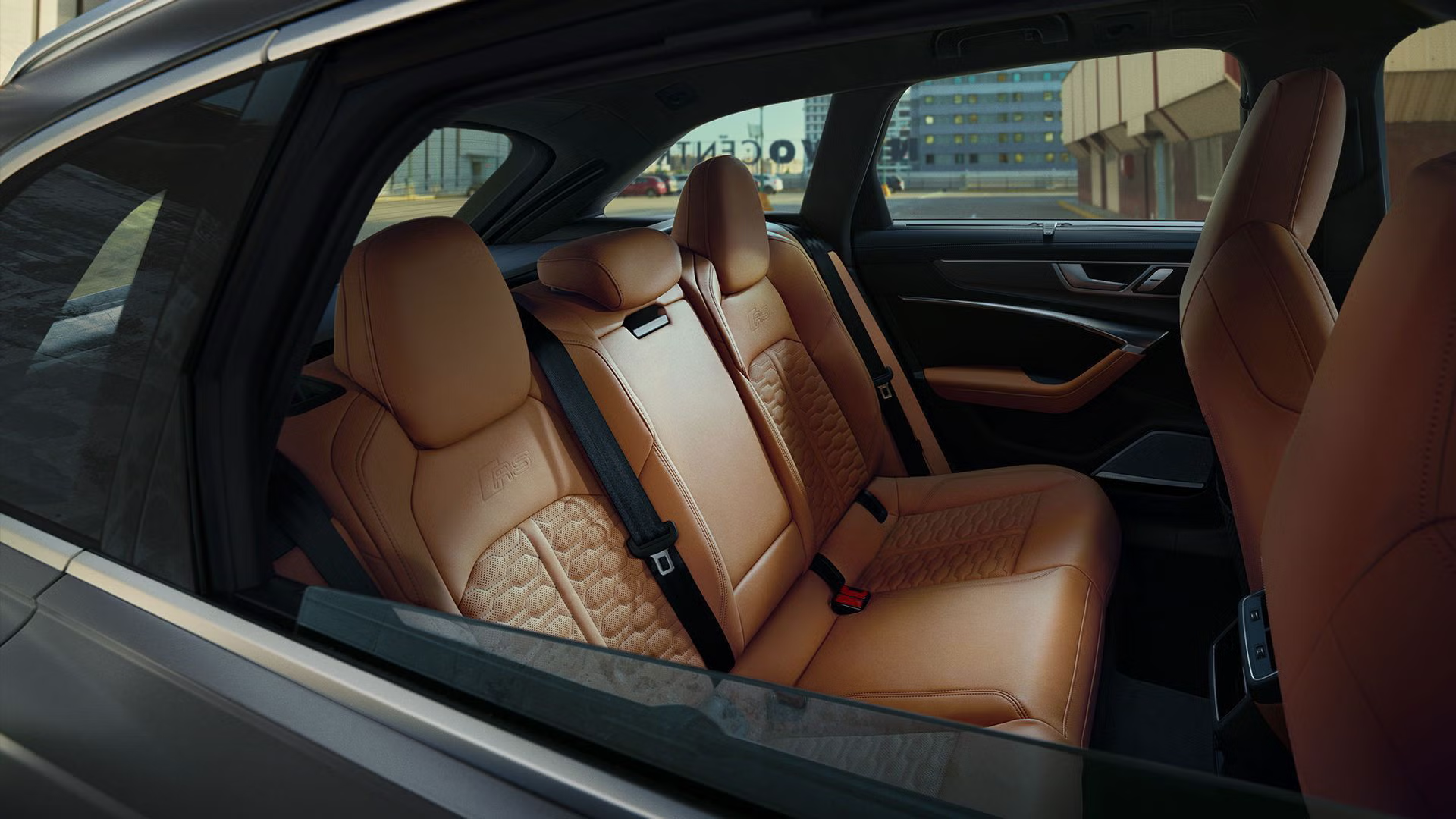
(Somehow I was so excited to drive the car, I forgot to take more interior pics. These are from Audi.)
Now the disappointment. Reach down on the side of the driver’s seat where the massage controls would be, and you find plastic placeholder inserts. Blanks. The massage seat option is not available on the RS 6 Performance, apparently in the name of keeping the focus on driving dynamics. I understand the argument. I disagree with the conclusion. At $158,865, buyers have earned the right to a lumbar massage on their commute. Audi makes some of the finest massage seats in the segment. The person buying this car almost certainly has other Audis with massage seats and will notice the absence of them here. It is a strange omission on a car that otherwise refuses to compromise.
My iPhone paired immediately on first connection. No hesitation, no confirmation loop, just connected. After a week of press cars that required multiple attempts and menu navigation, this landed as a genuine luxury. The wireless charger in the center console fits the iPhone 17 Pro Max with just enough room to spare. Getting it back out while driving requires some attention. Fortunately, the charger sits deep enough in the console that if you leave it in the car while running an errand, it is out of sight and not advertising itself. One practical note, there is no clear way to power off the wireless charging pad, which raises the question of what happens if you set something metal down on it. I did not test this for obvious reasons.
The volume knob is positioned within the natural reach of the driver’s right hand, which may sound like a baseline expectation, but it is not universal in this segment. The steering wheel also carries a rotary volume control that works predictably. Track forward and back fall easily to hand without looking. These details combine to create a driving experience that does not require you to take your attention off the road to manage basic functions.
Audi RS 6 Avant Performance: On The Road
You press the RS button on the steering wheel.
Let’s go.
You’re probably wondering, is 630 horsepower notably more impressive than 590 horsepower? Yes, yes, it is. The RS 6 Avant Performance does not build power the way a naturally aspirated engine does, where you feel the crescendo coming and have a moment to prepare for the next wave. The twin turbos deliver an immediate, slightly alarming sensation in the best possible way. On the highway, pulling out to pass something with your foot down produces a result that belongs in a different category than most things wearing wagon bodywork.
RS mode completely transforms the car’s character. The exhaust opens, the throttle response sharpens, the transmission holds gears with more aggression, and the car becomes something that sounds as serious as it goes. In normal mode, it is composed and quiet, a supremely comfortable long-distance machine that returns reasonable fuel economy and asks nothing difficult of you. The dual personality is not a marketing claim. It is a genuine engineering achievement, and one of the things that makes the RS 6 the answer to the forever car question for people who live real lives with their vehicles.


The paddle shifters deserve their own mention in the context of the recent Maserati Grecale Trofeo review. The Trofeo’s paddles are large, fixed, and quite satisfying to use. The RS 6 Performance’s paddles are smaller and move with the steering wheel rather than staying fixed to the column. In most driving situations, this is a non-issue. In situations where you want to make a quick sequential downshift while the wheel is turned, the smaller moving paddles require a little more deliberate reach. Neither approach is wrong, and honestly, when I wanted to downshift through a parking garage, I used the shift lever, which falls easily to hand.
The steering wheel, heated and Alcantara-wrapped, communicates what the front wheels are doing with a precision that makes the RS 6 feel smaller than it is. Parking garages and tight parking lots require attention at this width. The car is long and wide, I couldn’t even get my car cover all the way onto it. The automatic volume reduction when reversing is a thoughtful touch. You are already concentrating on not clipping something. Not having to reach for the volume knob simultaneously is a nice touch.
The driver assistance systems are worth documenting. On the highway, with three cars ahead running at speed and no indication of hazard, the pre-collision system issued a high-pitched alert and executed a brief emergency brake intervention before canceling itself. Nobody was stopping. Nothing had changed in the traffic ahead. It was a false alarm, and it was, to put it plainly, terrifying in the moment. This kind of false positive erodes trust in the system over time, which is exactly the wrong outcome for safety technology. Sensors can fog in morning dew conditions, which may have been the case here.
Finally, the sun visor situation, which has now appeared in two reviews. The driver’s side visor has its grab indentation on the right side only. Reaching for it with your left hand is awkward. Like Inigo Montoya, I am not left-handed, though I often drive one-handed on the right side enough that it catches me. The Grecale was the same, so that’s European cars in a row with the same design choice.


Summary
Here is what the 2026 Audi RS 6 Avant Performance is: a 630-horsepower family wagon, capable of 190 mph with the right package, wearing optional ceramic brakes, all for $158,865 as tested.
It is truly one of the best cars currently on sale. It is quick enough to embarrass dedicated sports cars at a stoplight and composed enough to carry your family across three states in comfort. It is beautiful from every angle and understated enough to park in a regular lot without attracting the kind of attention that makes you nervous. It has a gas guzzler tax on the window sticker, and it has earned it. The omission of the massage seat is a genuine miss. The glare on the lower screen in direct sunlight was mildly annoying. The false positive from the pre-collision system was memorable for the wrong reasons. All easy fixes.
None of that changes what this car is. I drove the 2023 RS 6 Avant and called it a forever car candidate. The Performance variant has more power, better brakes, and a sharper tune. The answer to the question has not changed.
It is still this one.
2026 Audi RS 6 Avant Performance
Base MSRP: $130,700 | As-Tested: $158,865 | Engine: 4.0L Twin-Turbo V8 + 48V mild hybrid | Output: 630 hp / 627 lb-ft | 0-60: 3.2 sec | Transmission: 8-speed Tiptronic | Drivetrain: Quattro AWD | Fuel Economy: 16 mpg combined | Assembly: Neckarsulm, Germany
 Jeff Glucker