
 By William Byrd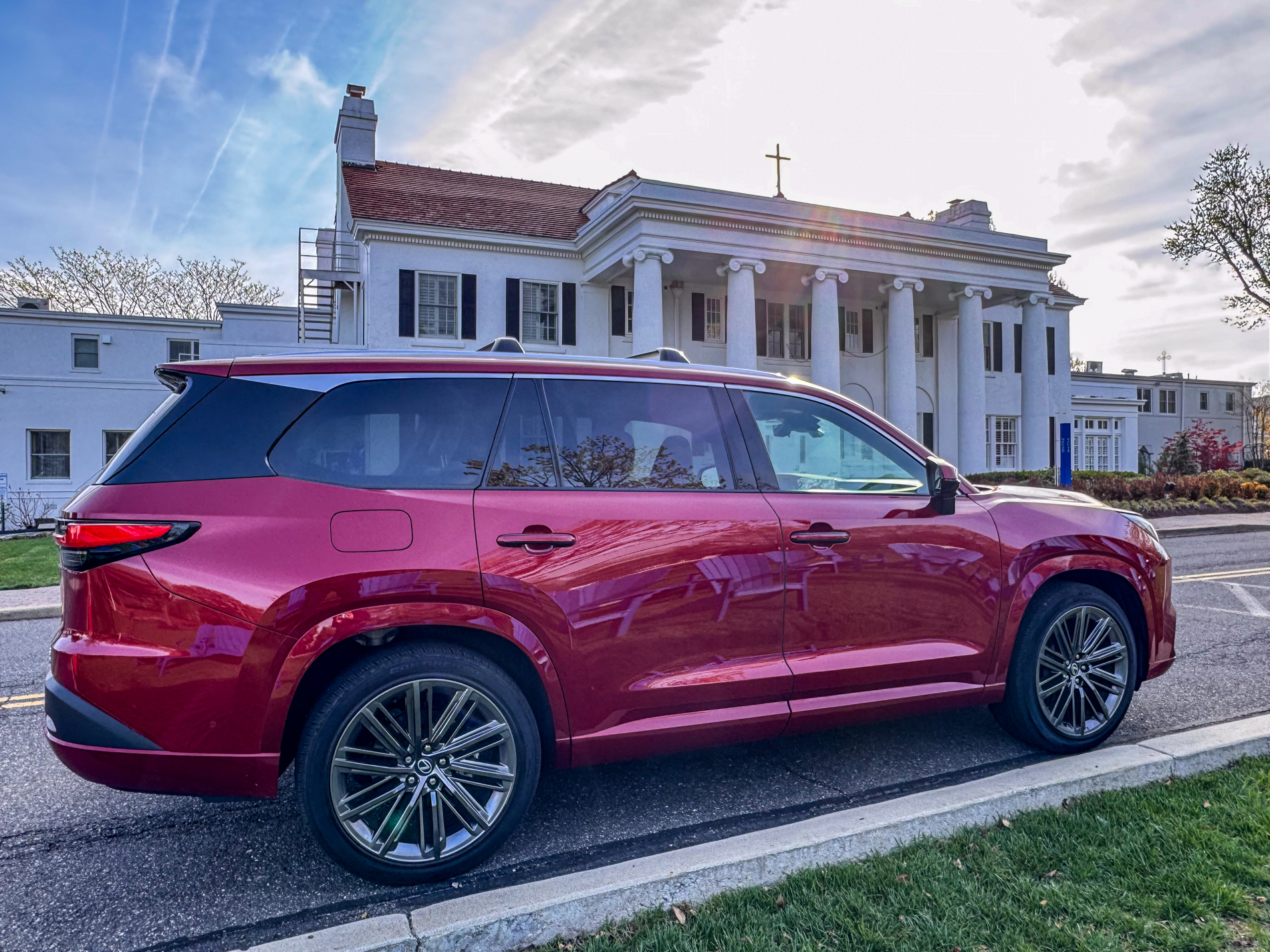
There is a question that follows the Lexus Texas (TX heretofore) everywhere it goes, and it is a fair one: Why spend $80,000+ on this when you could spend $60,000 on a Toyota Grand Highlander? Both ride on the same platform. Both are assembled in Indiana on the same line. Both will haul three rows of family without drama.
This isn’t just a regular TX, though. The 2026 TX 550h+ gets an exclusive powertrain, a quieter cabin, and the longer warranty that comes with the Lexus purchase. Whether the financial math maths for you is a personal question. Let’s look at what the $80,000 ($85,369 in this case) is actually buying.


2026 Lexus TX Plug-in Hybrid Overview
The TX lineup for 2026 spans four powertrains and multiple trim levels, which sounds complicated but sorts out cleanly once you understand the logic. Basically, you start with the TX 350, then hop up to the TX 500h Hybrid (both of which I have reviewed). The 550h+ sits at the top of the powertrain hierarchy and is available only in the Luxury grade.

TX 550h+ Luxury AWD — from $82,060.
A 3.5-liter V6 working with two electric motors and an 18.1-kWh battery gets a combined 404 horsepower. AWD is standard and the only option available. EPA-estimated at 29 mpg combined in hybrid mode, 76 MPGe, and 33 miles of all-electric range. Zero to 60 comes in 5.9 seconds, about as quick as my 2001 Honda Prelude was back in the day.
Standard equipment at this grade is extensive: heated and ventilated front and second-row seats, power-reclining third-row seats, a 14-inch touchscreen, a panoramic glass roof (new for 2026), semi-aniline leather, and a Mark Levinson audio system. One important note for PHEV shoppers: the TX 550h+ supports Level 1 and Level 2 charging only. There is no DC fast charging option. A full charge takes approximately three hours on a Level 2 outlet. Plan accordingly.
While we’re talking specs and features, back to that Grand Highlander question. The top trim Platinum AWD rings in around $60,000 fully optioned. The extra $20,000 buys you the exclusive PHEV powertrain, a quieter, more refined cabin with better seat materials, a 14-inch screen versus the Grand Highlander’s 12.3-inch screen, a longer warranty (4 years/50,000 miles versus Toyota’s 3/36,000), and, if you need it, the Lexus badge.

Our TX tester had some options added; you can read for yourself above. That all results in an out-the-door price of $85,639. Whether that math works is, again, a personal question. Let’s get into the details, shall we?


2026 Lexus TX 550h+ PHEV AWD: Inside & Out
The TX 550h+ gets Lexus’s current Unified Spindle grille treatment, which is body-colored and cleaner in execution than the more aggressive expressions of the spindle design from a few years back. The proportions feel right for a three-row vehicle of this footprint. It feels substantial but not bloated. The 22-inch alloy wheels on our test vehicle looked pretty good, and at least they aren’t black.
Despite its dimensions, the TX handles urban parking with less anxiety than you might expect from a three-row SUV. Visibility is good, and the available surround-view camera means you are never truly guessing about where you’re going.


Inside, the 14-inch touchscreen feels large, but Lexus has integrated it thoughtfully rather than just bolting it to the dashboard. Round physical shortcut buttons flank the screen on both sides, which keep the most common functions accessible without menu navigation.
One honest note on muscle memory: I kept reaching for the temperature control when I meant to reach for the volume. The layout puts those two functions closer together than I expected, and I made the wrong grab more than once during the test week. This is the kind of thing that vanishes after a bit of ownership time, I’m sure.
Front seat quality is excellent. Nice leather, and the 14-way power-adjustable seats have heating and ventilation. The driving position is elevated, giving you a nice perch to see what’s happening around you. The standard panoramic glass roof brightens the cabin nicely.


Storage in the TX is genuinely well thought out. The wireless charging pad sits on a surface that retracts to reveal a hidden cargo compartment underneath, which I have been seeing in more vehicles recently, and I like it every time. It is the right idea to keep valuables out of sight, but with easy to access when you need them.
The cupholders in the center console are removable, so you can store something larger in the space or clean out crumbs and accumulated debris without a shop vac. The center console between the second-row seats also has the same removable cupholder system. For families, this is a small detail that becomes a large one over time.


The second row is adjustable fore and aft. With the second row pushed forward, adults in the third row have legitimate legroom. With it pushed back, the third row becomes less hospitable, but the second-row passengers are correspondingly more comfortable.
Cargo space in the TX is solid for the class. Behind all three rows, you get 20.2 cubic feet, which is enough for a real grocery run without asking anyone to move. Fold the third row, and that opens to 57.4 cubic feet, and the power-fold makes it quick. Drop the second row as well, and you end up with 97 cubic feet of flat floor space, which puts it in minivan territory. The liftover height is low enough that none of this requires an athletic commitment.
However, because of the batteries and such in the TX, the Grand Highlander actually wins on interior storage space and can seat eight versus the TX’s six.


2026 Lexus TX 550h+ PHEV AWD: On the Road
The TX 550h+ does not feel like a performance vehicle in normal driving, but 400 horsepower in a three-row SUV sort of sneaks up on you. In EV mode around town, it is whisper-quiet, the powertrain transitions are seamless, and the whole experience feels serene rather than urgent. Then you need to get through a yellow light, or a gap opens on the highway that requires immediate commitment, and the TX feels quick. The surge is immediate, smooth, and somewhat out of character for something this size.
Regenerative braking is noticeable, and even more so in Sport mode. Lift off the accelerator, and the TX slows with more gusto than a conventional SUV would. This is not unusual in PHEVs, but it is worth knowing if you are coming from a traditional powertrain. The aforementioned sport mode lives inside the menu system rather than on a dedicated button, which is a choice that prioritizes clean design over quick access. I checked whether the car remembers your Sport mode selection after you power it off and back on. It does not. Every drive starts in Normal.
The driver attention monitoring system, which watches for signs of inattention, struggled with my habit of resting my hand at twelve o’clock on the wheel. I reviewed the Volvo EX30 recently and had the same experience. This is apparently where my hand goes, and apparently where the sensors do not want it to go. We seem to be at an impasse, automakers.


The steering wheel controls use a touch-to-identify system where hovering your thumb over a button displays its function before you commit to pressing it. The concept is sound. In practice, the system requires your finger to fully register before it activates, which means quick inputs sometimes require a second attempt. Tracking forward on a playlist while driving requires more deliberate finger placement than it should. I understand the logic. I, once again, miss normal buttons.
The door handles, however, open immediately on contact. Coming from the Hyundai Palisade the week before, where the capacitive sensor required deliberate hand placement to register, the TX’s immediate response felt like a small luxury every single time.
Summary
The 2026 Lexus TX 550h+ is a genuinely excellent three-row PHEV that makes a strong case for itself on the merits of its powertrain and features. The interior is quiet and refined, and delivers third-row flexibility that is thoughtful, reflecting how real families actually use these vehicles. The 33 miles of electric range covers most daily driving without touching the V6.
No DC fast charging means planning accordingly. Sport mode requires a menu trip to activate and resets every time you park. The steering wheel touch controls require more patience than physical buttons do. These are the trade-offs for a cabin that prioritizes cleanliness and refinement over immediacy.
About that Grand Highlander comparison, though: the Toyota is a great option, and the $20,000 gap is not imaginary or insignificant. The TX 550h+ offers something the Grand Highlander cannot match at any price: the PHEV powertrain, a quieter cabin, and the Lexus ownership experience. I know people who would spend the extra money on the badge. I know why. And I think they would be happy with the Lexus Texas.
2026 Lexus TX 550h+ Luxury AWD
Base MSRP: $80,310 | Engine: 3.5L V6 + 18.1-kWh battery | Output: 404 hp combined | 0-60: 5.9 sec | EV Range: 33 miles | Fuel Economy: 29 mpg combined (hybrid) / 76 MPGe | Drivetrain: AWD standard | Charging: Level 1/Level 2 only (no DC fast charge) | Seating: 6 passengers
I guess your ‘01 Prelude wasn’t stock, huh? Because those were lucky to hit 60 mph in less than 7s.
Crap, you’re right! Wistful memories improving the times drastically.