
 By Ross Ballot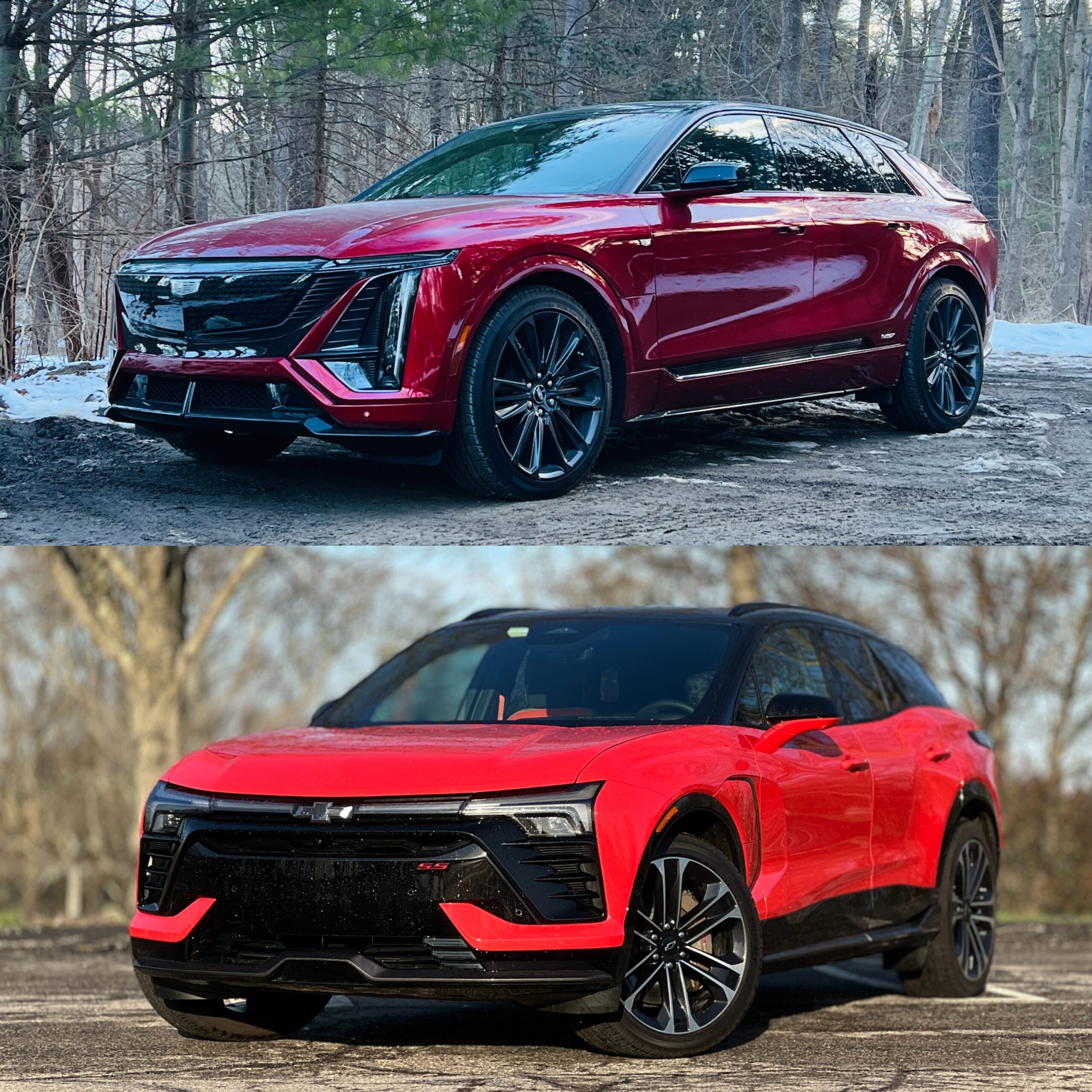
To sit at the big kids table in 2026, a given manufacturer needs to be pumping out a hotted-up performance version of an otherwise mundane electric vehicle. In the case of General Motors, that means utilizing the BEV3 platform to build the Chevrolet EV SS and a Cadillac Lyriq V. Other brands might be slinging thousand-ish horsepower machines, yet GM builds these with 615 horsepower and 650 lb-ft of torque. Even so, both are well-rounded, extremely enjoyable-to-drive vehicles that are very much jack-of-all-trades and master-of-none, which is exactly what a “performance” EV needs to be these days. Consider us fans.

Good Bones
First things first: The chassis. GM’s engineers really know what they’re doing. The responsiveness displayed here is top-notch for an EV, and the Cadillac is hands down the best I have experienced so far. There’s just a delicacy to it that makes all of your inputs instantly turn into the vehicle’s outputs that is hard to find in the SUV world. I expect the same can be said of the Chevrolet, yet the seats are so flat and without bolster that it’s effectively impossible to take advantage of the power, torque, and fun present in the Blazer EV SS.

The ride quality is slightly stiff on both cars but what do you expect? It’s tough to make a three-ton SUV handle, corner, and react like a true V-car while being uber-plush. Still, the ride quality is more than palatable even on the horrid New England roads. You could easily road trip these cars without any ride quality qualms whatsoever. You’ll complain about the seats in the Chevy though, which thankfully isn’t an issue the Cadillac has as its seats are excellent.

You guessed it: They’re fast
Not that this will come as a surprise to anyone, but both the Blazer EV SS and the Lyriq V are fast as hell. 615 horsepower and 650 lb-ft of torque paired with all-wheel-drive will do that. Motor Trend clocked the Lyriq V’s 0-60 MPH run at 3.3 seconds, with a 12.0 quarter mile at 113.1 MPH. Motor Week reported 3.1 and 11.8, respectively. The Lyriq-V scoots, and the Blazer EV SS is comparably quick. A drag race would come down to whoever gets the holeshot, and on a back road both are point-and-shoot monsters. The only limitation here in how fast you can go is, again, the Chevy’s seats.

Not that it needs it from a performance perspective, but we do wish the Cadillac benefited from a slight bump in power versus the Chevrolet. When a luxury badge is emblazoned across the vehicle everywhere you look, it should really pack a little extra punch. There is slightly more drama when using the Caddy’s Velocity Max mode versus the Chevy’s Wide Open Watts (WOW) mode, yet it’s not nearly distinguishable enough.

There is a slight range limitation in the Lyriq V versus the Blazer EV SS, with the former able to go 285 miles on a charge versus the latter’s 303. You can probably chalk this up to the extra 200 pounds or so the Cadillac carries around thanks to its supplemental luxuries over the Chevrolet. Either way, both numbers are respectable, albeit not overly impressive.

On the design front, both the Chevy and the Caddy are attractive enough for the purpose at hand. Many people who saw the Blazer commented on its Habanero Orange paint, though your author much prefers the Radiant Red Tintcoat draped over the Lyriq. That said, the styling of both cars is different enough that most would never assume they’re on the same platform unless they were parked in a way to show their unmistakably similar silhouette. In some regard, the Cadillac’s sharper edges and D-pillar spanning rear light treatment do it huge favors in appearing less blob-like, which the Chevrolet definitely suffers from. Though, if you want Camaro-esque interior accoutrements, the Chevy is your pick here.

Interior wins and woes
Moving inside the cars, the Cadillac’s interior is very good. It’s extremely functional, well laid out, and spacious. The same can be said for the Chevy, though its seats are decidedly less comfortable, and not just less than the Caddy but than any other car we have tested in recent memory. Really, the seats are the major letdown with the Chevrolet, and it might be the way in which the Cadillac’s price premium is most justified. The interiors are otherwise fairly similar; Both cars have the same basic user interface for their screens, though the Caddy still gets CarPlay while the Chevy is stuck with GM’s built-in functions like Bluetooth and native navigation. Here, the Chevy’s infotainment feels like a step backwards while the Caddy’s is appropriately modern.

Before this double review closes, I have to voice a qualm. Electric cars are smart. One “feature” that both the Blazer and Lyriq tout is powered EV charging port doors. This is just a needless, showboaty and pointless piece of tech applied to a part of the car that doesn’t need to be overcomplicated.

Pricey, but we understand why
As far as pricing goes, the Blazer EV SS starts at $60,600 and our test vehicle came in at $64,090 with options and destination. The Cadillac is a big leap up, with the MSRP starting at $83,795 and the vehicle pictured herein listing at $87,710. Whether the price jump from the Chevrolet to the Cadillac is worth it really comes down to buyer preference and the depth of their wallet; these cars are mechanically identical, so it’s the Caddy’s added luxury and curb appeal that drives up the price and to some will make it justifiable. And the Lyriq V really is more luxurious: It’s quieter inside, has better amenities, the seats are light years ahead of what Chevy fits in the Blazer, and it has more of a swoon factor. Then again, it’s unlikely people will cross-shop these vehicles.

EVs are becoming a dime a dozen. Very few are bad, some are decent, there’s many that are good, and occasionally one is great. The 2026 Chevrolet Blazer EV SS and Cadillac Lyriq V are both good vehicles, with a fantastic chassis underpinning both and well-rounded, easy-to-use interfaces in the case of both. Neither has that “x-factor” that makes them supremely desirable, and yet both are very easy to recommend, especially the Lyriq V if you can swing parting with the extra disposable income.

2026 Chevrolet Blazer EV SS
Yay
- Supercar quick
- Excellent usability
- Lyriq V performance at ⅔ the price
- Good range and charging speed
- Super Cruise is a marvel of modern technology (or at least of hands-free driving)
Nay
- Punishing seats
- No Apple CarPlay or Android Auto
- Doesn’t feel special
- No frunk
The Takeaway
With performance and practicality in spades, there’s a lot to like about the 2026 Chevrolet Blazer EV SS. We just wish the seats were SS badge worthy.

2026 Cadillac Lyriq-V
Yay
- Feels like a proper Cadillac inside
- Supercar quick
- Genuinely nice to interact with day-in and day-out
- Great tech and infotainment
- Super Cruise is about as good as hands-free driving gets
Nay
- Some plastic and flimsy feeling interior parts for the price
- A lot of piano black on the outside
- No frunk
- Performance isn’t any better than the Chevy’s
The Takeaway
Both a Cadillac and a supercar surpriser, the 2026 Cadillac Lyriq V is an excellent offering from GM. It’s a smidge away from greatness, and its price doesn’t help its case, but this is a very good vehicle overall that we’d be happy to live with every day.
 Jeff Glucker