
 By William Byrd
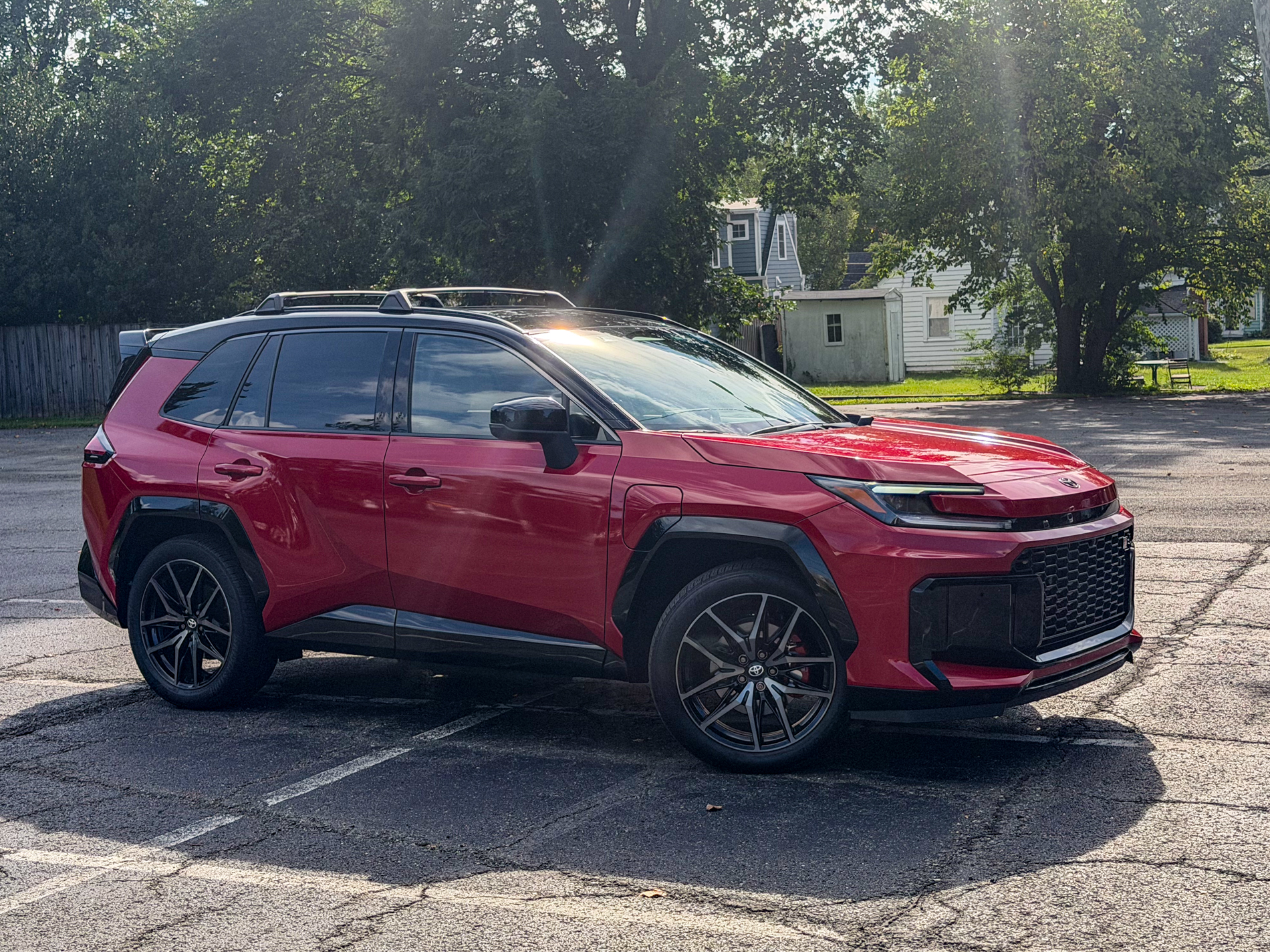
Its early in the morning, and a colleague walked up to the 2026 Toyota RAV4 PHEV GR Sport in the parking lot and genuinely…did not know what he was looking at. I let him know it was a RAV4. After processing this information, he used the top of the double-decker rear spoiler to rest his coffee cup, which is probably not in the product planning documents. He seemed genuinely intrigued. As was I.
The 2026 RAV4 is part an entirely new sixth generation (XA60), and the GR Sport is the most aggressive thing Toyota has ever done with the nameplate. Gazoo Racing-tuned suspension and steering, 324 horsepower from a plug-in hybrid system, and styling aggressive enough to confuse people who have been seeing RAV4s for years. Whether that is the right direction for the world’s best-selling compact SUV is a fair question. On the evidence of a week behind the wheel, it is at least the most interesting direction.


2026 Toyota RAV4 PHEV GR Sport: Overview
The 2026 RAV4 represents a full redesign, and one of its most consequential changes is this: the gas-only RAV4 is gone. Every 2026 RAV4 is electrified in some form, either a standard hybrid or a plug-in hybrid. There are ten trim levels across the two powertrains, organized into three design categories: Core, Rugged, and Sport.
Here is the full PHEV lineup.

RAV4 PHEV SE AWD — $41,500.
The PHEV entry point, and a pretty compelling one. The full 324-horsepower plug-in hybrid system is standard across all four PHEV trims, which means the SE makes identical power to the GR Sport at $7,000 less. Standard AWD, up to 49 miles of electric range, wireless CarPlay and Android Auto, Toyota Safety Sense 4.0. For buyers who want the PHEV powertrain without the sport package pricing, this is the rational choice.
RAV4 PHEV Woodland AWD — $45,300.
The rugged variant. Dunlop all-terrain tires, a two-inch tow hitch receiver, a roof rack, and LED fog lights. One of two PHEV trims with DC fast charging. If you actually use a RAV4 for outdoor capability rather than just the implied capability, the Woodland looks pretty solid.
RAV4 PHEV XSE AWD — $47,200
The well-rounded, sport-adjacent trim. Sportier exterior treatment and the other PHEV trim with DC fast charging, capable of 10-80% in around 30 minutes. For buyers who want visual personality and public charging flexibility, this is the middle ground.

RAV4 PHEV GR Sport AWD — $49,885 base, $51,335 as-tested.
The range-topper, ours came in Supersonic Red with Black two-tone. The GR Sport is the product of Toyota Gazoo Racing’s involvement and gets you unique suspension tuning with revised spring and damper rates, retuned electric power steering, a distinctive exterior package with unique front and rear fascias, a wing-type rear spoiler, 20-inch black machined alloy wheels with summer performance tires, and red GR accents throughout. Inside: mixed media and SofTex-trimmed seats, a 12.9-inch touchscreen, a 12.3-inch digital gauge cluster, heated front seats, and paddle shifters.
Our test car adds all-season tires, premium paint, two-tone exterior paint, black chrome wheel locks, and low-profile cross bars to land at $51,335. Notably, the GR Sport does not offer DC fast charging. If you need fast public charging capability, the XSE is the one.


2026 Toyota RAV4 PHEV GR Sport: Inside & Out
It is aggressive. And using it for a RAV4 is weird, but it is the correct word. The GR Sport’s front fascia has a wide, low mouth with vertical LED accent lights, angular projector headlights, and enough visual mass to read as a different vehicle category than a standard RAV4. The wing-type rear spoiler is the statement piece, divisive in the way that statement pieces usually are, and useful, apparently, as a temporary coffee cup holder.
The 20-inch black machined wheels fill the arches nicely and the red GR accents tie the exterior together without overwhelming it. In Supersonic Red with the Black two-tone roof, the test car was not subtle. The overall effect is a vehicle that looks like it has sporting intentions rather than just sporting decals.
The colleague who did not recognize it as a RAV4 is not really a car person, but his reaction is data. Toyota has moved this vehicle far enough from its practical family crossover identity that it reads as something else entirely. That is either exciting or troubling depending on what you thought the RAV4 was for.


The inside is quite nice, and better than the exterior’s sport-forward attitude would lead you to expect in terms of everyday refinement. The GR Sport seats are SofTex-trimmed with proper side bolstering, which is unusual in this class and immediately noticeable the first time you take a corner with any real intent.
The sound system is a genuine highlight, particularly the bass response. The six-speaker setup has no right to sound as good as it does in a Toyota RAV4. The 12.9-inch touchscreen is large and sharp, running Toyota’s fully redesigned Audio Multimedia system with 5G connectivity and wireless CarPlay and Android Auto. My iPhone paired on first attempt. The wireless charging location is one of the best I have encountered in a press car. It sits angled slightly away from the driver in a dedicated slot that is easy to slide a phone into and easy to retrieve from. The angle keeps the phone secure and accessible simultaneously. It is a small ergonomic detail executed correctly.
The center console opens from either side, which is a useful feature for both front passengers. It makes a satisfying mechanical clunk when it latches, louder than you might expect. One comfort note for longer drives: the area where the right leg rests while the foot is on the accelerator has a hard plastic surface. On a short commute this is not noticeable. On a road trip it would become a potential comfort issue.


2026 Toyota RAV4 PHEV GR Sport: On the Road
With 324 horsepower in a compact SUV that weighs around 4,400 pounds, you’ll get a 0-60 in 5.3 seconds, which is what independent testing clocked on the GR Sport. That puts it in the same conversation as dedicated sport sedans from a few years ago. Off the line it is immediately, convincingly quick in a way the RAV4 nameplate has never been associated with. There is a slight plateau as speeds climb past highway entry ramp territory before the combined system continues building. The initial surge is strong enough to cause my phone, resting in the storage area adjacent to the charging spot, to launch itself across the center console under hard acceleration.
The RAV4 GR Sport handles direction changes with reasonable precision and less body roll than any previous RAV4, and the steering has enough weight and feedback to make you feel like the car is responding to your inputs rather than interpreting them. It is not a sports car, by any means. It is a compact SUV that handles better than compact SUVs normally do. The summer performance tires standard on the GR Sport contribute to it of course, though buyers in cold climates should note the all-season option on our test car swaps them out.
The PHEV system provides up to 49 miles of electric range in real-world driving, and when the gas engine supplements the electric motors the transition is seamless. Combined range with a full tank and full charge comes in around 515 miles, which reframes how you think about long trips. With 49 miles of electric range covering most daily commuting, the gas engine largely stays dormant in urban use. The efficiency story is genuinely impressive for a car that is also pretty quick.
As noted, the GR Sport does not have DC fast charging, which the XSE and Woodland trims do offer. Level 2 charging only means public fast charging stations are not useful on road trips. The hybrid’s range makes this a manageable limitation, but it is worth knowing before you build expectations around public charging infrastructure. Toyota Safety Sense 4.0 operated quietly and correctly throughout the test week, which continues to be the most positive thing I can say about a driver assistance system.
Summary
A valid question was raised during this test week: why spend $51,335 on the GR Sport when the SE PHEV delivers identical power at $42,950, and the savings could go toward something that is actually a sports car?
It is a fair point, and I have versions of it swirling around in my head most oft hetime. What I keep coming back to is this: I want a daily driver that looks interesting, sounds good, goes reasonably well, and is practical enough to live with. The GR Sport satisfies most of that list. The bolstered seats, the aggressive exterior, the suspension tuning, and the audio system together create a vehicle with more personality than the RAV4 name would suggest, at an $8,385 premium over the base PHEV when you factor in the as-tested price.
Whether that premium makes sense depends on what you are looking for. If driving dynamics and exterior character matter, the GR Sport is the one. If you want the same power and range for less money and plan to spend the difference on something genuinely fun, the SE PHEV is patiently waiting.
My colleague’s coffee sat perfectly level on the wing spoiler for the duration of the conversation. This is anecdotal evidence, but it is the most convincing demonstration of functional aerodynamics I witnessed all week.
2026 Toyota RAV4 PHEV GR Sport
Base MSRP: $49,885 | As-Tested: $51,335 | Color: Supersonic Red w/ Black | Engine: 2.5L 4-cyl + dual electric motors | Output: 324 hp combined | 0-60: 5.34 sec (tested) | Electric Range: 49 miles | Combined Range: ~515 miles | Fuel Economy: 86 MPGe / 37 mpg (gas mode) | Charging: Level 1/Level 2 only (no DC fast charge) | Drivetrain: AWD standard | Assembly: Obu, Aichi, Japan
 Jeff Glucker