
 By Ross Ballot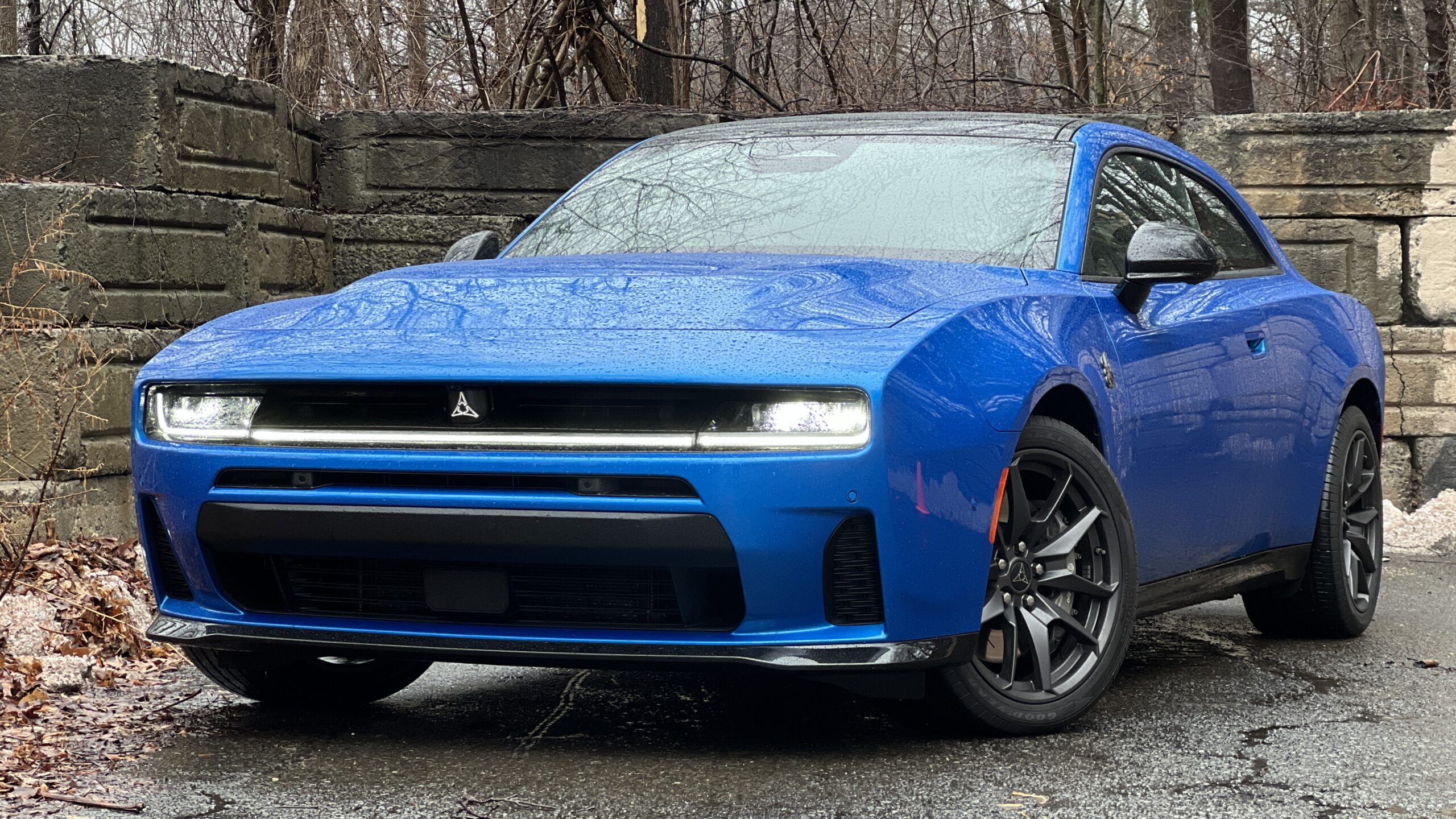
Any followup to a massive success is subject to inevitable supplemental scrutiny. The new-for-2024 Dodge Charger demonstrates just that, with the new car always destined to be viewed under a microscope after the prior Challenger-Charger duo’s perpetually fantastic sales. And still, few cars rustled feathers over the last few years like the new Charger. Ditching the Hemi in favor of the Hurricane inline-six or optional all-electric powertrain was a risky decision, but with the outgoing Charger/Challenger largely unchanged aside the addition of power, bodywork, and styling since the late-aughts, any change was going to be controversial.

What year is it?
The biggest complaint about the 2008-2024 Challenger (and the Charger that lived alongside it) came down to it being too big, too heavy, and too overt. So Dodge did what Dodge does and… made it bigger, heavier, and somehow even more overt. Look, the first article I wrote for Hooniverse was about my long-departed 2014 Challenger R/T. I usually root hard for the brand, and I don’t want to come down too hard on the new Charger, and yet I have many bones to pick with it and what Dodge has done with the brand’s psuedo-halo car.

Let’s lead with the good. The new Charger is an absolute attention black hole. It draws eyes and stares in a way few vehicles on sale today do. From some angles it’s a very good looking car, perhaps not as timeless as the outgoing models (especially the Challenger), but still attractive and certainly striking by modern standards. It’s also reasonably comfortable inside, with plenty of room to spread out and back seats that actually fit real-life humans (and, lest we not forget, you can get the new Charger with two extra doors if you plan to use those rear seats often). We also like that the car is a liftback, just be wary that it may impact some low-roof garages when opened fully.

Heavy car, heavy foot
This Charger Scat Pack Plus is also undeniably quick, with a 0-60 MPH time of around 4.0 seconds and plenty of low and mid-range punch any time you slam the fun pedal to the floorboard. The twin-turbocharged straight six cylinder 3.0-liter engine makes a healthy 550 horsepower and 531 lb-ft of torque, and despite it being taxed with hauling around 4,850 pounds, it still feels happy to get out of its own way.

Also, with all-wheel-drive, this is a car that can (on the appropriate tires) genuinely be driven year-round in even the worst conditions and regions (within reason). Say what you will about how competent front or rear-wheel-drive are on the right tires when the weather turns snowy; four driven wheels are simply better than two in the dredges of northern winters. It might not be as fun, yet all-wheel-drive is undoubtedly more proficient in climbing hills and getting through deeper unplowed streets. Boasting AWD is a claim neither the Mustang nor Camaro can put on their spec sheet, so advantage Charger here. (Yes, we know the last Charger and Challenger were available with AWD, though never in top-spec performance guise like this Sixpack is.)
Now on to the not-so-good, which is… a lot.

Charger rubs you the wrong way
The six-cylinder’s engine note is abrasive, loud, and omnipresent. It has no real “off” switch other than when you’re not on the gas pedal. The transmission, too, is frustrating; more lethargic than anything else, it occasionally drags shifts– especially when cold– like the old 5-speed automatic from the pre-refresh seventh-gen car always did. Shifting into gear is also tricky, with the deliberately macho lever sometimes not easily notching into the desired slot. Ergonomics were clearly not a priority when this shifter was developed.

Speaking of development, the Charger two-door also has perhaps the longest doors of any car I have ever driven. While this isn’t a problem out in the country or even the suburbs, using the Charger in a city shows that it’s clear the four-door was part of the development process, and the result is that it’s nearly impossible to open the coupe’s doors far enough to get into and out of the car when parked in a tight lot.

Stuck inside the car, you’re riddled with looking at an overwrought state of disarray. There’s huge valleys between pieces of dash and door, not to mention enormous panel gaps and a glass roof that doesn’t offer the ability to become opaque on demand like in other cars. Visibility is also poor, with the raked windshield and high dash meaning there’s only a small opening to see through between the top of the radio and the rearview mirror. The massive C-pillar also obscures the rear ¾ view especially when looking over your shoulder.


UConnect, too, is problematic; the historically excellent infotainment system is slow and laggy in this iteration, with notable delays from input to resulting action. The system also locked us out of using some performance modes for reasons unknown.

Over-promises, under-delivers
Perhaps we didn’t have the Charger in the right scenario, but we also found it to be not particularly great to drive. At low speeds it feels massive, with no communication from the inputs whatsoever, and though it settles down at speed, the ride is still a little too jarring for it to be a great grand tourer. The tight back roads we sought out to be a test of its mettle proved too much for the car to really jive with, its sheer dimensions and heft outweighing the performance on tap figuratively and literally. Memory tells us the last Scat Pack felt more willing to party when the road turned twisty.

There’s also the issue of the Charger’s price. The car seen here has a $54,995 starting point and was optioned with the $1,095 Blacktop Package (black exhaust tips, dark badges, 20” wheels), the $995 full glass roof, $1,495 Alpine premium stereo, $695 Bludicrous paint, $995 performance seats, and $4,995 Customer Preferred Package 22B which includes things like heated/ventilated front seats, heated rear seats, a 16-inch gauge cluster, wireless phone charging pad, surround-view camera, Heads Up Display, interior ambient lighting, memory seats and mirrors, power rear hatch, power tilt/telescoping steering column, and other less consequential tidbits. Total MSRP of the test vehicle: $68,355 including destination.

With the Charger knocking on the door of $70k, it’s natural for thoughts to stray to the other options at this price point. This is territory occupied by the Ford Mustang Dark Horse and BMW M2 if you’re set on a coupe, not to mention a very-base (rear-engine) Chevrolet Corvette. Four-door seekers can, for comparable money, buy a Cadillac CT4-V Blackwing or Audi RS3. Then again, we expect buyers of the new Charger want a new Charger and nothing else will do; they are either model or brand-specific die-hards, and even despite this car’s shortcomings, simply nothing will be a suitable substitute. Which reminds us, used prior-gen Scat Packs and Hellcats are less expensive than the new Charger, and a much more enjoyable time from behind the wheel.

The new Dodge Charger is an interesting idea conceptually as a two-and-four door vehicle on the same platform, an interesting proposition with two kinds of propulsion available, and an interesting demonstration in visuals leading the charge. It’s also an interesting failure, if not at least partially so.

I don’t mean to be a downer on the new Charger as it has a lot of promise, yet it doesn’t feel fully baked; it’s as if Dodge was stuck between a rock and a hard place when engineering and beginning production of the Charger, which is exactly what happened with government regulations that changed dramatically during its development cycle. The 2026 Charger Scat Pack is effectively the car nobody asked for, and it feels as if even the engineers weren’t fully on board with what had to be done at the time. Now they’re stuck, trying to make the most out of a car that’s sub-optimal from the ground up. Then again, the same was said endlessly about the last Charger and Challenger, thanks to their ancient Benz roots. Those cars were always far from perfect, but we loved them anyway. Maybe there is hope on the horizon for this newest Charger.
Yay
- Visual standout
- Spacious and comfortable
- Customizable inside and out
- Quick off the line
- Liftback practicality
Nay
- Six-cylinder engine sounds at excess volume
- Heavier than the last one
- Not engaging to drive
- Tacky interior elements
- Doors a country mile long
- Price point has many worthy contenders
The Takeaway
It’s best to not think about the 2026 Dodge Charger Sixpack HO Two-Door Scat Pack Plus (say that ten times fast) as a replacement for the outgoing Charger/Challenger but rather as a vehicle slotting into a slightly different place in the brand’s lineup. This context at least helps to dull some of the pain of losing the Hemi and having to listen to the Hurricane I6, but look past the deliberately overstated styling inside and out and you have a good cruiser that’s more usable than the cars it may be cross-shopped against.
 Kamil Kaluski
  William Byrd