
 By William Byrd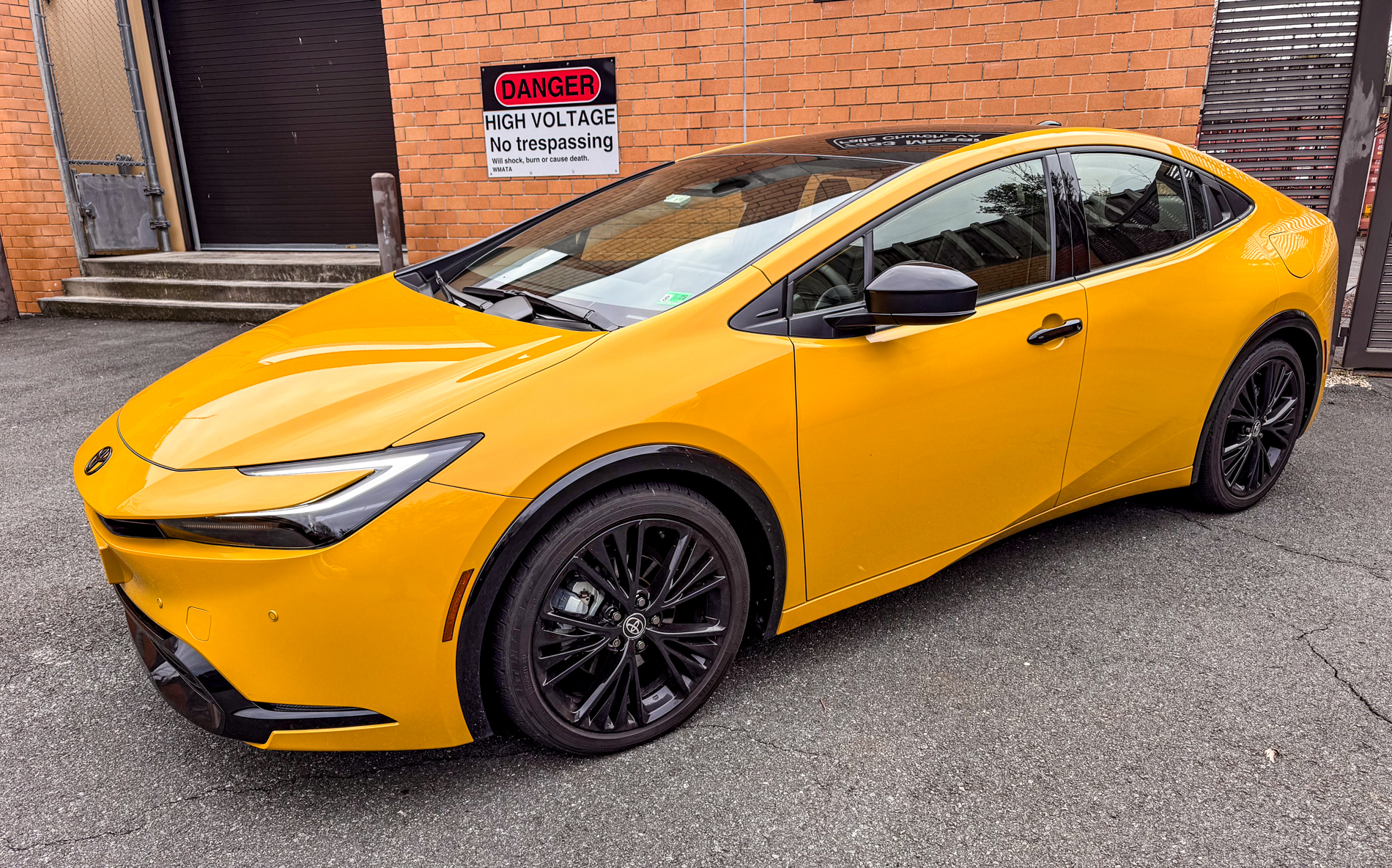
The Toyota Prius has spent the better part of thirty years being the car that responsible people drive. Sensible. Efficient. Correct. The automotive equivalent of eating your vegetables. Then Toyota went and redesigned the thing in 2023, made it genuinely good-looking, gave the plug-in version 220 horsepower and 40 miles of electric range, painted it Karashi yellow, slapped a Nightshade badge on it, and now here we are — reviewing a Prius that someone stopped me to compliment in a parking lot. Progress.


2026 Toyota Prius Plug-In Hybrid Overview
The 2026 Prius Plug-In Hybrid (Toyota dropped the “Prime” name last year, so it’s now simply PHEV) comes in four trims: SE, XSE, Nightshade, and XSE Premium. All are front-wheel drive only, and unlike the regular Prius hybrid, the PHEV’s larger battery pack rules out the AWD option. Every version shares the same core powertrain: a 2.0-liter four-cylinder paired with a 13.6-kWh lithium-ion battery and electric motor for a combined 220 horsepower. On a full charge, you’re looking at up to 40 miles of all-electric range. When the battery runs out, it operates as a conventional hybrid, returning around 48 mpg combined. The 3.5-kW onboard charger brings the battery to full in about four hours on a Level 2 outlet.

Here’s how the four trims stack up:
SE — $33,775.
The entry point, and a genuinely compelling one. Heated front seats, wireless Apple CarPlay and Android Auto, Toyota Safety Sense 3.0 with pre-collision warning and lane-keeping assist, and up to 44 miles of EV range (the smaller 18-inch wheels help efficiency). The SE makes a strong case for the budget-conscious PHEV buyer.
XSE — $37,025.
Steps up to 19-inch wheels, a more sport-oriented exterior, SofTex-trimmed heated front seats, a power-adjustable driver’s seat, wireless charging, and an auto-dimming rearview mirror. The 19-inch wheel option slightly reduces EV range to around 39 miles.
Nightshade — $37,795.
The car we’re driving here. Builds directly on the XSE but with the blacked-out all-the-things treatment: black badges, black door handles, black bumper trim, black shark-fin antenna, and 19-inch black-finish alloy wheels. The headline addition is the Karashi yellow paint — a mustard shade that’s exclusive to this trim and polarizing in exactly the right way. The dashboard gets carbon-fiber-looking accents inside. This is the extroverted Prius.
XSE Premium — $40,470.
The range-topper. Upgrades to a 12.3-inch touchscreen, an eight-speaker JBL Premium Audio system, a fixed glass roof, ventilated front seats, and a surround-view camera — the last of which, frankly, should appear lower in the lineup given the rear visibility situation. More on that shortly.


2026 Toyota Prius Nightshade Plug-In Hybrid: Inside & Out
The silhouette is low, swooping, and genuinely aerodynamic. At certain angles, it borrows a little from the Tesla playbook with a low roofline, a fastback rear, and a sense of forward motion.
The Nightshade’s blacked-out exterior treatment works well against any of the three available colors (white, black, and yellow), but it earns its name most convincingly in Karashi. It is a very yellow car. The kind of yellow that reads differently in morning light than it does at noon, and that might take some thinking to fully commit to. The stranger who stopped me in the parking lot to say “wow, cool color” was not the last person to notice it. If you buy this trim in Karashi, accept that you may be having conversations about your car.


From the outside, the Prius is a statement. From the inside, it’s closer to a science-fiction film set. Specifically, and I say this as more of a Star Wars person than a Star Trek one, the interior reminds me of a Star Trek landing craft. It’s the windshield shape, the instrument cluster placement, the general sense that the cockpit was designed by someone who thought about what driving might look like in thirty years and worked backwards. It’s a good kind of unusual.
The dashboard runs an ambient light strip across its width, enhancing the futuristic effect without being garish. The heated steering wheel is excellent, and the carbon fiber-look dashboard accents add visual interest without feeling like they’re trying too hard.
The wireless charger sits next to the gearshift, which is a sensible location by most measures. In practice, it means the cupholders live further back. It’s not a dealbreaker, especially if you have longer arms, but it’s worth knowing before your first coffee run. The charger itself was inconsistent in my experience: placement that looked correct sometimes charged, sometimes didn’t. Unlike some of the more reliable wireless chargers I’ve used in recent press cars, this one needed babysitting. The volume knob also sits too far away for comfortable use while driving. It’s a reach.
The main infotainment screen on this trim is a respectable size, and the system runs Toyota’s latest Audio Multimedia platform with wireless Apple CarPlay and Android Auto. It looks slightly tacked-on from some angles, as most touchscreen interfaces bolted onto existing dashboards often do, but it’s not distracting to use. One gripe, though, and it’s pretty common across the industry. Apple CarPlay takes over; it fills the entire screen, so Toyota’s native controls disappear behind it. There’s no persistent strip of shortcuts or hard buttons to use. If you want to access a Toyota system function while CarPlay is active, you’re hunting. My Jeep’s Uconnect keeps a row of primary functions visible regardless of what’s running, and I missed that here.


The driver’s instrument display is pushed forward into the top of the dashboard, positioned for line-of-sight viewing, and it mostly works. Getting the steering wheel positioned so it doesn’t clip part of the display takes some adjustment. The driver awareness system, which monitors attentiveness using a sensor near the steering wheel, needs to be mentioned. I received multiple warnings during the first day of driving. One, while adjusting the mirrors, others simply because I drive with my hand resting on top of the wheel, which apparently reads as insufficient steering contact. It’s calibrated conservatively and is always watching. Curious if I could ask it how my singing sounds?
There’s also a small storage compartment low in the center stack, the kind of discreet hidey-hole that’s genuinely useful for anyone who wants to keep a wallet or phone out of sight but within reach. My dad was a cop for years, and he would have loved this compartment.


Rear seat space is adequate for the class. Cargo behind the rear seats measures 20.3 cubic feet on the Nightshade. That’s less than the non-plug-in LE’s 23.8, owing to the battery pack, but the hatchback opening is wide and practical, and the seats fold to expand cargo space considerably.


2026 Toyota Prius Nightshade Plug-In Hybrid: On the Road
Decent horsepower in a car that weighs about 3,500 pounds is a recipe for fun. Well, maybe not “fun” but around town in EV mode, the Prius is whisper-quiet and genuinely quick off the line. When the gasoline engine kicks in, which it does so smoothly, without drama, the transition is noticeable but polite. Highway cruising is comfortable and confident. The 39-40-mile electric range covers a typical day’s commute without touching the gas engine at all.
The turning radius is legitimately impressive. My personal benchmark is whether a car can execute a U-turn on my street without a three-point correction. My two-door Jeep clears it. The Prius Nightshade nailed it in one clean lock.
Unfortunately, I took the Prius on a 120-mile round trip to a family funeral, but it handled the highway leg capably. My back remained comfortable through the first half; by the return leg, I’d been leaning my right leg against the lower dash surround, which is a harder surface than you’d want for extended contact. Not painful, just something you’d notice on a long drive. The seats themselves are supportive and sized appropriately.
Rear visibility deserves a mention. The curved rear hatch creates a meaningful blind spot when reversing. You adapt, and the standard front and rear parking sensors help, but reserving the surround-view camera for the XSE Premium is the wrong call. At this price point, with this body style, everyone should have it.
Summary
The 2026 Toyota Prius Nightshade Plug-In Hybrid is proof that a car can change its personality without changing its mission. It’s still one of the most efficient, most sensible choices in its class. It just doesn’t look or feel like a sacrifice anymore.
Forty miles of electric range covers most daily driving without the gas engine ever waking up. When it does, 48 mpg keeps running costs low. That’s the case for the Prius in 2026: the vegetable part of your meal is actually delicious now, and it comes in yellow.
2026 Toyota Prius Nightshade Plug-In Hybrid
Base MSRP: $37,795 | Engine: 2.0L 4-cyl + 13.6-kWh battery | Output: 220 hp combined | Transmission: ECVT | Drivetrain: FWD | EV Range: ~39 miles | Fuel Economy: 48 mpg combined (hybrid mode) / 114 MPGe | Cargo: 20.3 cu ft
 Jeff Glucker
I have essentially zero interest in this car, but it’s 1000x more appealing than the new Prelude. I can understand why people would want it, even if I don’t. This is a relevant vehicle for the market.