
 By William Byrd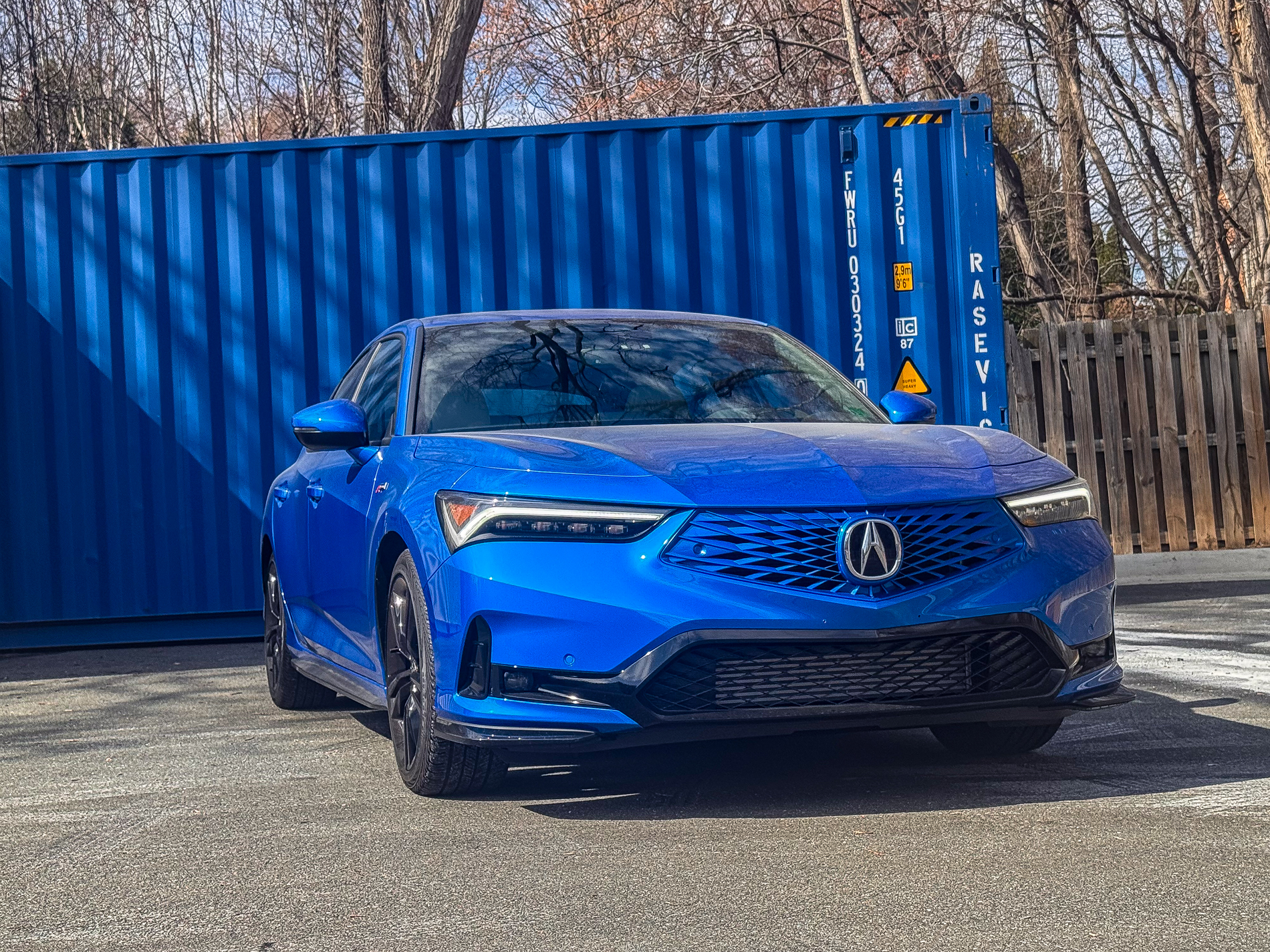
I’ll be honest with you, the Integra has a bit of a problem. Not because it’s a bad car, it isn’t, but because the Civic Si exists, shares the same engine, and costs about six thousand dollars less by the time you’re comparing apples to apples. So every time I got into this A-Spec with Technology Package, that question was riding shotgun: Is the Acura actually worth it? By the end of the week, I had an answer.


2026 Acura Integra Overview
The Integra is back! OK, it’s been back for a few years now, and by this point it’s earned the right to be evaluated on its own terms rather than as a nostalgia play. The 2026 model continues as a four-door liftback. Don’t call it a sedan, don’t call it a hatchback, Acura prefers “liftback.” It’s powered by a 1.5-liter turbocharged four-cylinder making 200 horsepower and 192 lb-ft of torque. Yes, it’s the same engine as the Civic Si. We’ll get to that.

It’s pretty wild that Acura’s build site starts with a chassis image, not the full vehicle. Very techy, curious how it plays with buyers. Either way, you can choose from three trims, not including the brilliant Integra Type S. Here’s how the lineup breaks down:
Base Integra — $33,400.
The entry point, and not a bad one. You get heated front seats, a nine-inch touchscreen, wireless Apple CarPlay and Android Auto, and the full AcuraWatch safety suite. CVT transmission only at this trim.
Integra A-Spec — $36,900.
Adds the sport exterior treatment, 18-inch Berlina Black wheels, ambient LED lighting, and a sportier interior vibe. Still CVT only, but the car starts to look the part it wants to play.
Integra A-Spec with Technology Package — $39,200 (CVT) / $39,200 (6MT).
The sweet spot of the lineup, and the car we’re driving here. The Technology Package brings meaningful hardware: an Adaptive Damper System, the 16-speaker ELS Studio 3D Premium Audio setup, Ultrasuede-trimmed front seats, a head-up display, rain-sensing wipers, and a surround-view camera. Critically, it’s also where the six-speed manual transmission comes into play — at no additional cost over the CVT. Drive modes expand from three to four, adding an “Individual” setting to the mix. For most buyers, this is the Integra to get.

Double Apex Blue (not white, as the sticker says) adds $600, and the painted grille is $325, but otherwise you’re out the door on a new manual Integra A-Spec with the Tech package for around $41,000. As usual, let’s see if it stacks up to its MSRP.


2026 Acura Integra A-Spec: Inside & Out
First, let’s talk about the grille. For 2026, Acura made the body-colored grille an available option. Reception on social media was mixed — which, if you’ve spent any time on automotive Twitter, means roughly half the people loved it, and the other half were upset in a way that felt disproportionate to the stakes involved.
Acura has a complicated grille history. The “beak” era was a rough stretch, an aggressive front-end experiment that polarized people for the better part of a decade. The brand has been on an upswing since, and the current Integra’s front end is genuinely handsome in its standard form. The body-colored option is a stylistic choice — it reads cleaner and more monolithic in person than it does in press photos. Whether it’s for you is a personal call, but it reads as confident rather than desperate, which is the right direction.
Beyond the grille, the A-Spec trim gets a new aero body kit for 2026, black 18-inch wheels, and a low, athletic stance that lends the liftback its sporty pretensions. It looks like a car that wants to be driven. That counts for something.


Small details matter in cars at this price point, and the Integra gets a few of them right in ways you don’t always expect. The HVAC controls use physical rotary buttons that produce a satisfying click-click-click when you cycle through fan speeds. This sounds like a trivial thing until you’ve spent a week in a car where climate adjustments happen through a touchscreen sub-menu.
The dashboard metallic trim looks more premium than the price tag strictly suggests. It’s not quite at the level of a BMW or Audi’s interior materials, but it seems considered rather than merely adequate. The overall cabin architecture is clean and sport-oriented without being too aggressive. Our test car wore a cream interior with blue accent stitching, a combination that’s easy enough to opt around if it’s not your thing; there is a plain black option.
The gear selector is worth a brief mention. It’s a compact, well-weighted knob that’s satisfying to use, unlike larger, chunkier shifters. For cold-weather buyers, the metal gets cold. It will probably also get warm in summer. Bring gloves or patience accordingly.


Rear seat room is decent. I wouldn’t want to sit behind my own driving position for an extended trip, but I imagine adults can tolerate it for reasonable distances. For a car of this size, that’s about the right expectation to set.
The liftback configuration gives you 24.3 cubic feet of cargo space with the rear seats up. That’s a meaningful number for a car this size, and better than most compact sedans. Its genuinely useful for people who buy sport compacts as daily drivers rather than weekend toys. The hatch opening is wide and practical.


2026 Acura Integra A-Spec: On the Road
200 horsepower in a front-wheel-drive car weighing around 3,100 pounds is enough to keep things entertaining. In first gear, the Integra will light up the front tires if you’re not careful — or if you are careful and decide you’d like to be briefly less careful. The engine sounds good doing it, which matters more than people admit in car reviews. There’s a note to the exhaust that earns its performance claims without resorting to the artificial sound augmentation some competitors use to compensate for uninspiring powertrains.
The rev-matched downshifts on the manual are lovely. The blip-on-downshift is immediate and accurate, the kind of feature that amplifies your back-road driving experience. Even if you could heel-toe perfectly every time (which, let’s be honest, most of us can’t), the rev-matching makes it feel like you can.
Dynamic mode on the drive mode selector actually seems to do something, a distinction worth making, because on a surprising number of cars, “Sport mode” functions primarily as a placebo. Here, the throttle response firms up, the transmission revs more aggressively, and the whole car feels a shade crisper and more alert. It’s not a transformation, but it’s a genuine difference. The Adaptive Damper System — standard on the A-Spec with Technology but not on lower trims — is doing real work. The ride quality is firm enough to feel connected without being punishing, a balance many sport compacts miss in either direction.
A few ergonomic notes from a week behind the wheel. The front A-pillar is low enough that ducking in and out takes some conscious attention, depending on your height. Getting the seating position right takes some patience. There’s a zone where you feel too close to the dashboard, and another where the pedals feel slightly out of reach, and the sweet spot lives in between them. Once you find it, the seats — supportive, well-bolstered, with a headrest that sits naturally close to the back of your head — are genuinely comfortable for longer drives.
The turning radius is better than you’d expect. My personal benchmark for this is whether a car can complete a U-turn on my street without a three-point correction. My last two-door Jeep could do it. The Integra came very close, a solid result for a front-wheel-drive car with a 107-inch wheelbase
The Bottom Line
Back to that comparison that follows you everywhere with the Integra is the Civic Si, and it’s a legitimate one. Both cars share the same 1.5-liter turbocharged engine, broadly similar driving dynamics, and a shared chassis. The Civic Si starts at $31,495. The Integra starts at $33,400 and climbs to $39,200 for the A-Spec with Technology Package, the trim that makes the most compelling case for itself.
So what’s the Integra’s premium price buying you? A few things, actually. The Integra’s interior materials are a bit step up. The Adaptive Damper System on this trim produces a better ride quality than the Civic Si. The ELS Studio 3D audio system is genuinely great in a way that most cars in this price range aren’t. And the hatchback body configuration, with 24.3 cubic feet of cargo space, gives you real-world utility that a traditional trunk-based sedan can’t.
But the fact that we’re comparing an Acura to a Honda is telling. Hardly any other company is making affordable, quick, manual sedans. There is no truly affordable hot Corolla; the GR starts at $40,000 and has been hit with tons of dealer markups. You have to look at Hyundai’s Elantra N to find something similar. So what Honda is doing is, in part, what Honda has always done, albeit with some lapses. Making fun, practical daily drivers. So whether you’re into the Civic or the Integra, embrace it, buy one, because they’re a very good daily driver.
2026 Acura Integra A-Spec with Technology Package
Base MSRP: $39,200 (CVT) / $39,200 (6MT) | Engine: 1.5L Turbo Inline-4 | Output: 200 hp / 192 lb-ft | Transmission: CVT or 6-speed manual | Drivetrain: FWD | Cargo: 24.3 cu ft | Fuel Economy: 32 mpg combined (CVT) / 30 mpg combined (6MT)
 Kamil Kaluski
  Robby DeGraff
  Ross Ballot